A 2-Player Tabletop Cricket Game by Lugstars Gaming
1. Introduction
Power Play Cricket brings real-world cricket strategy to the tabletop with fast-paced, skill-based play. Variable bowling with three different balls, place fielders tactically, and time the perfect swing to score big runs. Designed for competitive two-player sessions, the game blends authentic cricket principles with accessible mechanics. These Power Play Cricket Instructions are not strict, and you should ammend the rules of play to suit your playing preferences.
Players: 2
Ages: 14+
Playtime: 30 mins–2 hours
Objective: Score more runs than your opponent across the selected match format.
Supported formats:
- The Hundred (100 balls)
- T20 (20 overs)
- One-Day International (50 overs)
- Test Match (unlimited overs, 2 innings per team)
A note from the creator:
Power Play Cricket was inspired by my misguided teenage claim that I used to keep wicket at school… a lie told to a taxi driver which snowballed into me getting talked into joining a cricket club for three whole seasons. The game may be fiction, but those dropped catches were very real.
2. What’s in the box?
Your game includes:
- 1 Batter Unit (gravity powered weighted bat swing mechanism)
- 1 Batter Gantry with integrated wicket keeper arms
- 1 Bowler Unit with integrated movable catch zone (simple, classic roll down a chute – turn to aim)
- 1 Bowler Gantry
- 9 Fielders (horseshoe catch zone bases)
- 3 Match Balls:
- Power Play Ball: Lighter, faster
- Stock Ball: Standard weight with light movement
- Swing Ball: Highest movement
- 6 Boundary Fences (4 straight fences and 2 player side fences to attach gantries)
- 6 Corner Pieces (with velcro strip to keep fences fixed in place)
- 1 Felt Pitch (with velcro strips, printed scoring zones, and “circle”)
- 1 Stumps Piece

3. Game Setup
3.1 Prepare the Pitch
Lay the pitch flat on a smooth surface. The central area must be crease-free for consistent ball roll.
A flat pitch = better gameplay.
Place boundary fences around the edge and push corner pieces down (there is a small notch on the fences to prevent movement) and fix onto velcro pads on the pitch.
3.2 Place the Batter & Gantry
- The batter gantry sits at one end of the pitch, and the batter unit sits in the gantry and rotates in from a 90 degree angle.
- The batter should freely rotate, and the button slider should allow the bat angle to change.
3.3 Place the Bowler
- The bowler chute sits opposite the batter.
3.4 Place Fielders
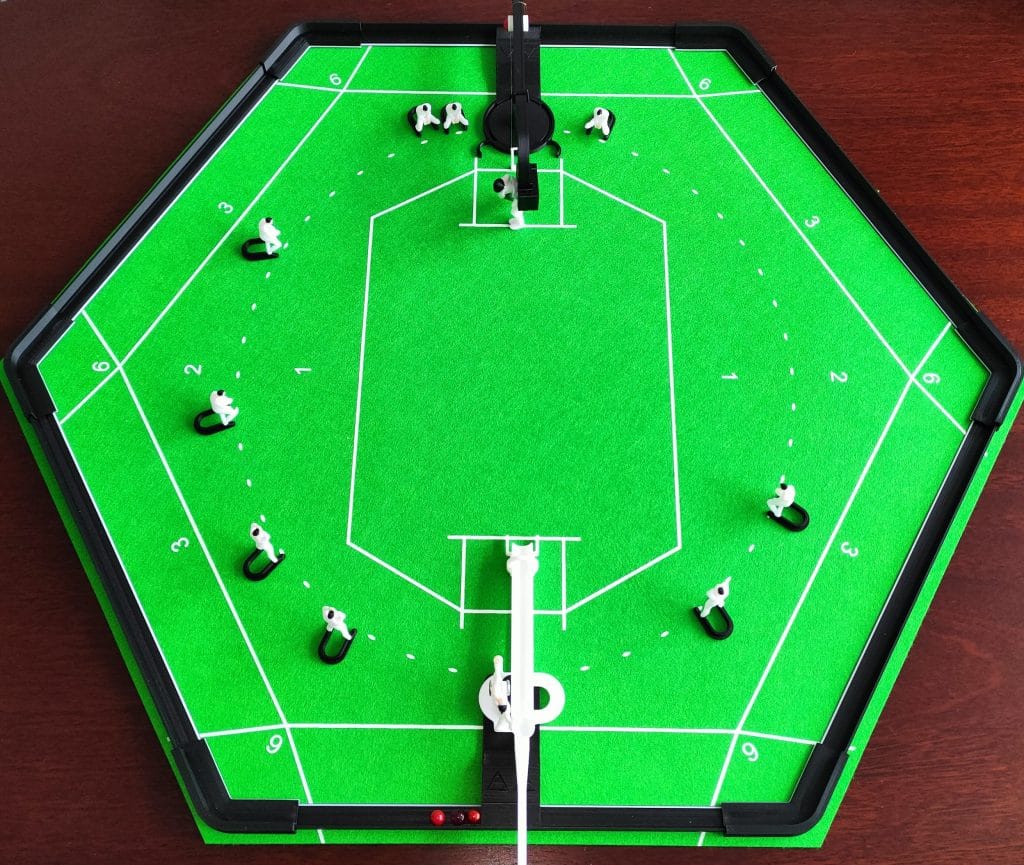
- Place 9 fielders anywhere except areas restricted by Power Play rules – the image below displays fielders outside the circle during the Power Play.
- A catch only counts if the ball ends completely inside a fielder’s horseshoe catch zone.
- Fielders must remain still during a delivery.
3.5 Perform the Toss
Winner chooses to bat first or bowl first.
3.6 Select Match Format
Use standard cricket formats or your own variants.
4. How to Play
A match is played in overs (6 balls per over).
Each team bats once (twice in a Test Match).
The batting innings ends when:
- 10 wickets fall, or
- All overs/balls are completed
4.1 Turn Structure (One Delivery)
- Bowler selects a ball and begins by placing the ball in the ‘cup’ and tilts the arm forwards allowing the ball to roll down the chute.
- Batter draws the bat backwards using the string, and controls the bat swing to hit the oncoming ball.
- Ball result is checked: run, boundary, or wicket.
- Reset the ball and enter the ball result in the Companion App.
- Next delivery begins.
4.2 Bowling
Bowler controls:
- Pace: The game intent is for the chute angle to remain in the fully upright position when bowling, but players can force the bowling mechanism to return prematurely bowling a ‘slower ball’ – this has been made intentionally difficult.
- Line: Aiming the ball takes a bit of practice. Like real cricket, there should be ‘some’ degree of natural variation in deliveries.
Bowler may move during a delivery to attempt a catch using the rectangular catcher at the front.
Ball Types:
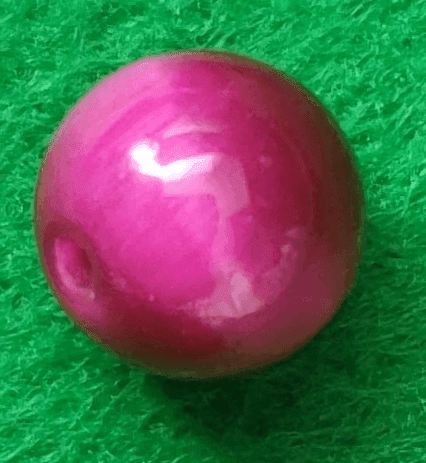
- Stock Ball: Notoriously difficult to score big runs from. Use this ball in the middle overs to stem the flow of runs and add pressure to the batter. It can move slightly albeit less than the Swing Ball.
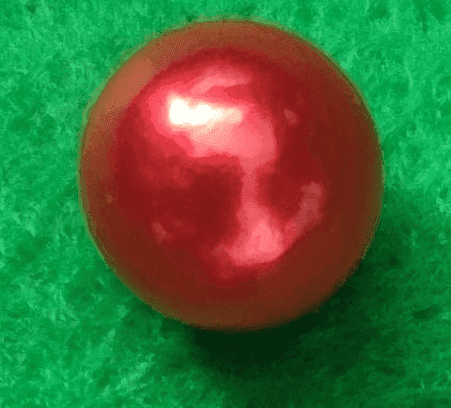
- Power Play Ball: This ball is lighter – it will fly to the boundary so use it sparingly outside of the Power Play.
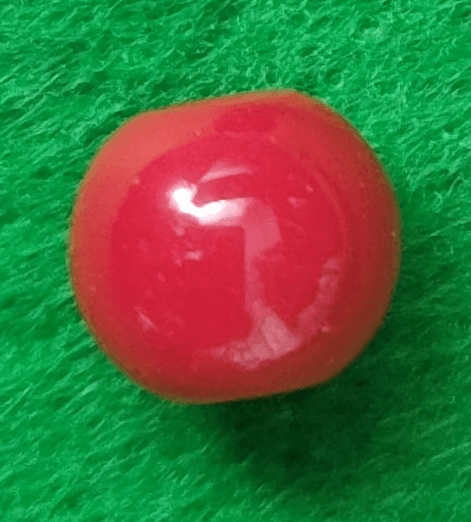
- Swing Ball: Use for unpredictable lateral movement – not every delivery will swing and it can leak runs, but it’s a great ball to turn to when you need a wicket!
4.3 Batting
The batter uses a gravity-powered swinging arm. The bat is weighted to allow for a balanced competition between bat and ball – not every shot will hit the boundary.
Draw the bat back with the string and release to play shots – the player may wish to control the bat swing by not fully releasing the string, but learning the best method to be in control of the shot – good timing is essential!
Aim the bat using the slide button to turn bat pivot. The handle is designed to with both left and right handed players in mind. We recommend new players start with a straight bat initially, and gradually adding more skilled shots as you become familiar with timing.
4.4 Fielding
Fielders are simple passive catchers—place them strategically.
Rules:
- You cannot move fielders during a delivery.
- You can move the bowler’s catcher during the delivery.
- A catch counts only if the ball ends fully inside the fielder’s horseshoe area.
- The wicketkeeper catches edges automatically.
- Fielders may only be placed in scoring zones, and must be outside the circle during the Power Play.
4.5 Scoring
Crossing run lines:
- 1, 2, or 3 runs depending on marked zone
Boundary 4:
- Hits the fence and stays in contact
- Balls bouncing back do not count
Six (6 runs):
- Lands in the marked six zone
Wickets:
- Bowled
- Caught (fielder, bowler catcher, or keeper)
- Edges only count if the ball touches the bat first
- LBW is optional but since it’s very difficult to determine, we recommend playing without LBW dismissals in Power Play Cricket)
- Stumpings: The bowler simply gains too much of advantage with stumpings, but you may wish to allow it.
- Hit Wicket: Very unlikely to occur, we suggest simply calling it a dead ball if it happens and replaying the delivery.
- Run Outs: Not implemented. For purists, you can select one or more fielders to be the designated ‘run out’ if caught by that fielder.
Power Play Cricket Companion App currently does not support Stumpings, Run Outs, Hit Wicket, or Extras. They will likely be available in a future update to be enabled in the settings menu. Our priority lies with getting the app on Google Play, and then implementing the Test Match format first.
5. Power Play Rules
Power Play occurs at the start of each innings.
During Power Play:
- Must use the Power Play Ball
- All fielders must be OUTSIDE the circle
- 3 fielders must be touching in a straight line
- except Power Play 2 in 50-over matches
This radically opens up scoring zones, encouraging aggressive batting.
Format Standard Power Play Lengths
- The Hundred: First 25 balls
- T20: First 6 overs
- 50 Overs:
- Power Play 1: Overs 1–10
- Power Play 2: Overs 41–50 (no 3-fielders-touching rule)
- Test Match: No Power Play restrictions
6. Match Formats
The Hundred
- 100 balls per team
- Power Play: First 25 balls
T20
- 20 overs
- Power Play: First 6 overs
50 Overs
- 50 overs per team
- Power Play 1 (overs 1–10)
- Power Play 2 (overs 41–50)
Test Match
- No over limit
- 2 innings per team
- No restrictions
- Longer, more tactical gameplay
7. Optional / Advanced Rules
- LBW: Player-agreed
- Edges: Must strike bat first
- Super Over: For tied matches
- Use of particular balls can be banned/enforced for one player as a handicap to even things up, or both players to generate a higher/lower scoring game.
8. Care & Maintenance
Your pitch quality directly affects gameplay.
Ironing the Pitch
- Iron underneath the pitch (unprinted side) using WOOL setting.
- Flip it over, place a tea towel on top, and iron the printed side gently.
❗ Never apply the iron directly to the printed lines.
The silk printing can transfer onto the iron.
General Care
- Keep string untangled
- Clean components with a soft cloth only
- Keep away from pets—cats love those little balls
- When returning the game to the box, fold the pitch into 3 sections as shown below, and roll it up – this will help prevent long term creases appearing in the area between the bowler and batter.
9. Hints & Tips
Batting
- The bat weights are central. ‘Middling’ a shot has less of an effect in Power Play Cricket than a real piece of willow, but it does make a difference.
- Allow the bat to strike through the ball rather than ‘jabbing’ at it. Practise with stationary balls to learn sweet spots.
- Turning the bat can be confusing, it takes practice. Remember, you can turn the bat after the bowler has released the ball, this takes some skill to pull off, but can be a great way to negate a persistent bowler!
- Make good use of the Power Play phase. You want to pile on as many runs as possible before the bowler can change the ball and bring fielders in – even at the expense of a few wickets.
Bowling
- Position your eye behind the bowlers ‘cup’ and watch it roll down the chute, remember you can catch it too!
- Bowl most of your deliveries with the Stock Ball – it’s harder to hit it to the boundary and has a good natural variation. Use Swing Ball sparingly for surprise deliveries
- Try to limit the batter scoring opportunities during the Power Play. Bowl wide of off stump, aim at the legs or move the bowler chute at the last moment to keep the batter guessing.
Fielding
- Position fielders as close to the bat as permitted, you cut off more scoring areas that way.
- Set your field to the ball you’re delivering, and don’t be afraid to change the field between balls.
- Keep checking the position of your fielders, particularly the slip catchers – they will get moved as you send down the inevitable wide ball and you need to close those gaps!
- Don’t ignore the leg side. Power Play Cricket was designed to allow shots all around the park, setting a leg side field can set up a great away swinger to clean bowl the opposition!
10. Troubleshooting Guide
Bat Mechanism Issues
Problem: Bat gets stuck
Two common causes:
- Changing the bat aim direction can sometimes be a little sticky, simply slide the button forwards and backwards a few times to free it.
- If players quickly draw and release the string, then quickly draw again while the bat is in motion, the string can loop around the pivot.
Problem: Weak swing
- The most common cause of a weak swing is poor timing. Maximum power is delivered if the ball is hit with the middle of the bat at the bottom of the bat swing (gravity slows the bat beyond this point).
- Bat string not fully withdrawn – it’s common for players to ‘bat tap’ like they do in real life. This will invariably result in loss of momentum in the bat swing.
Bowling Issues
Problem: Ball veers unexpectedly
- Chute not level – the bowler unit allows for some flex – this is by design to allow the bowler to generate more variation in ball delivery.
- Pitch crease → flatten with palm or iron again if necessary.
- Using Swing ball – this ball is unpredictable on purpose. It can give the bowler a great advantage, but can leak runs if you don’t protect the boundary behind the batter.
- It might seem obvious, but the table should be flat, and level.
Problem: Ball loses speed early
- Pitch crease
- Chute angle has dropped before the ball has been released.
Fielding Issues
Problem: “Not sure if it’s a catch”
- Rule: The ball must be fully inside the horseshoe zone
Problem: Fielders keep moving
- The underside of the Fielder is textured to limit this, but is smooth enough to absorb the ball momentum to prevent spilled catches.
Problem: Bowler catcher keeps spilling catches
- Caught and Bowled dismissals are difficult in real Cricket and we have tried to strike a good balance here. We recommend using fielders beyond the area you are comfortable protecting with the bowler.
Pitch Problems
Problem: Velcro becoming loose
- The pitch material has been carefully selected to provide the most balanced game play. We recommend reapplying velcro strip by building the whole fence and using the corner piece as a guide.
Problem: Creases returning after storage
- Iron underside again
- Store correctly as shown above
Problem: Silk print smudging/coming away
- Occurs only with direct heat/excessive abrasion
- Always iron through a tea towel
11. Safety & Handling
- Not suitable for children under 14
- Contains small parts
- Keep components and balls away from pets
- Do not iron printed surface without protection
- Avoid liquids on the pitch